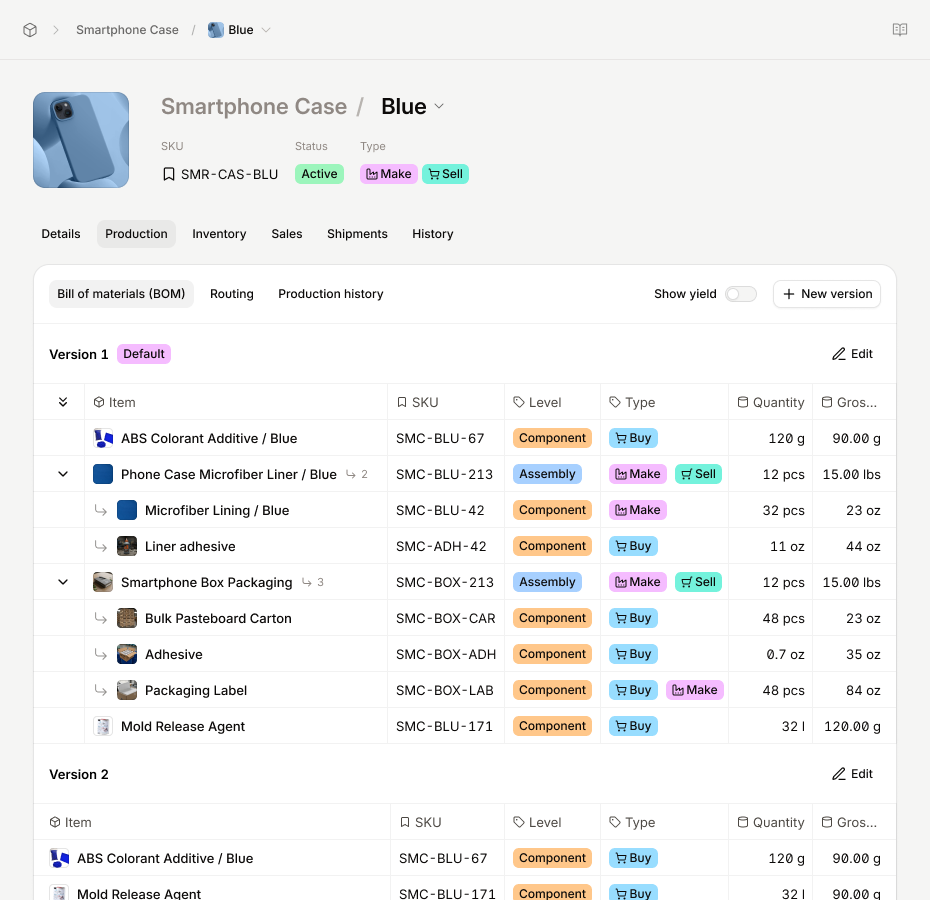
>
>
Warehouse management

Warehouse management software

Automate your processes to reduce carrying costs and optimize inventory management at multiple locations with Digit.
app.digit-software.com
Digit is trusted by

Spreadsheets lead to stagnation, Digit enables growth

Switch to a warehouse inventory management software that centralizes procurement, manufacturing, and selling to one screen.

What is warehouse management software?

By implementing a Warehouse Management Software (WMS) into your workflows, you can unlock capabilities to take complete control of your warehouse operations, all from one connected platform. A WMS software tracks all your items in real time, automates picking and packing, and syncs inventory across your sales and production. Many businesses initially rely on manual processes or cheap solutions. Still, by upgrading to a WMS system like Digit, you get live data and smart automation, helping you increase accuracy, lower costs, and keep fulfillment running on schedule.
"With Digit, everything from our inventory to our production data is the word of truth. I can trust it. I can rely on it."
Joshua Burris
Co-Owner, On Foot Innovations

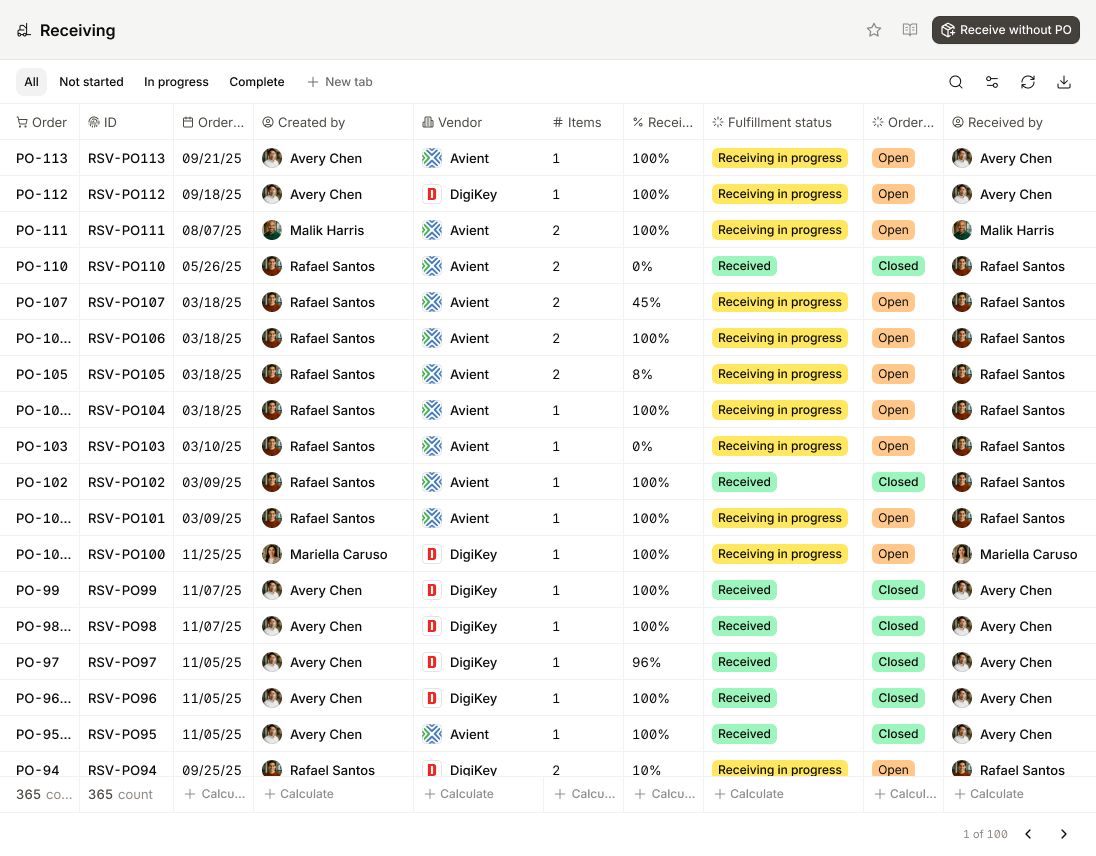
Live procurement visibility

Gain full visibility into every purchase, receipt, and SKU movement. Digit connects purchasing, warehouse, and inventory data in real time, so your team can manage procurement accurately.

Including:

  • Receive items in full or partially with instant stock and cost updates
  • Manage detailed PO lines linked to SKUs and supplier data
  • Automatically generate retroactive POs when unexpected items are received
  • Keep purchasing and warehouse records synced for every material and SKU

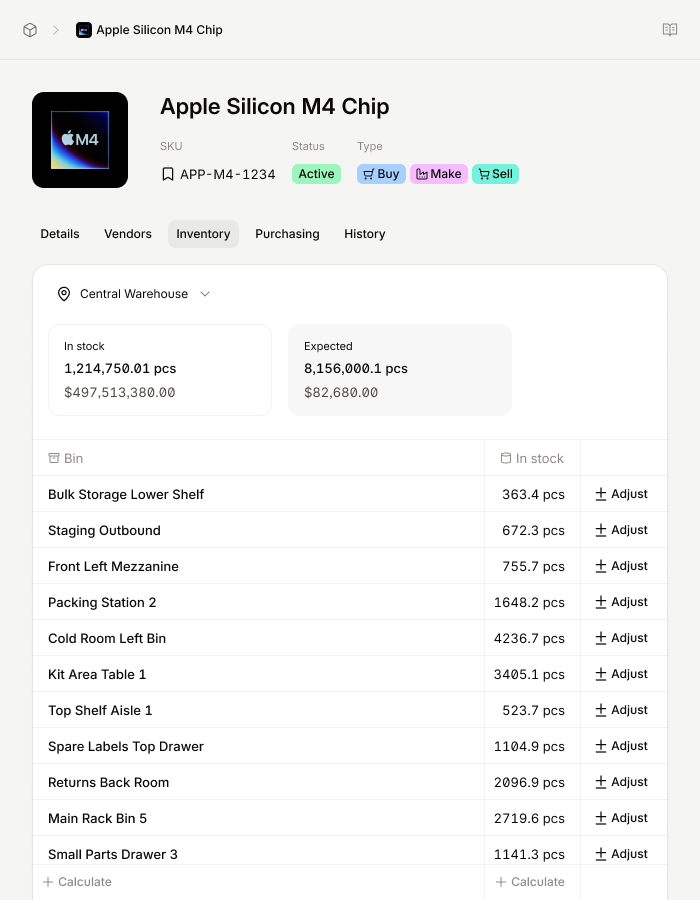
Real-time Inventory Management

Gain insight into every SKU and location with live data that keeps your stock accurate across your entire business for fast inventory control and traceability.

Including:

  • Upload and store documents or photos for each item record
  • See whether an item is bought, made, or sold at a glance
  • Track bin locations across multiple warehouses and storage sites
  • Use barcode scanning to adjust or reduce item levels directly from pallets or containers
why they chose DIGIT
Trusted by teams who can’t afford to slow down
“Digit has given us insight into current and upcoming stock. This has allowed us to procure more before we stock out.”
Adam Davis
Shipping & Receiving Manager, Upstate Beverage
“Our entire system has become much more streamlined thanks to both the software itself and the brilliant team behind it. It’s intuitive, clear, and packed with clever features that are rarely found in other ERPs.”
Ricardo Miranda
CEO & Co-founder, Attica Studios
“With Digit, everything from our inventory to our production data is the word of truth. I can trust it. I can rely on it.”
Joshua Burris
Co-Owner, On Foot Innovations
“With Digit, our speed and efficiency has most likely doubled, triple, or quadrupled. Digit has allowed us on every front to be faster, more precise, and it is allowing us to scale.”
Eliott Montgomery
Owner, No.1 Raw Materials
“Digit has been amazing. I love having all the data at my fingertips. I can pull it up on my phone, I can get it on my laptop, I can get it remotely. At any given time I know how much material I’ve got in stock and before I couldn’t do that.”
Joe Watkins
Division Owner, RC Plastics
“Digit has helped us better understand the innerworkings of our warehouse and inventory in real time. I like the attentiveness. We are a small business, so it is extremely appreciated to receive the level of dedicated care that we have received from the Digit team.”
Jackson Barnett
Sales and Strategy, ChemTick Coated Fabrics
“The impact Digit has had has been enormous, saving a lot of time, capturing a lot of data, streamlining a lot of processes; With a system that everyone loves to use.”
Tanner Thomas
Operations Manager, VersaCourt
“As a beverage company producing our own products and contract manufacturing, we needed a unified platform for assembly, sourcing, and traceability. Digit offered the best mix of usability and functionality.”
Chase Brooks
Founder, SolidLiquid
“Digit has exceeded our expectations! They've transformed how we handle our business processes, providing seamless implementation and outstanding ongoing support. The software is both powerful and easy to navigate. We couldn't be happier with our choice."
Joel Rodriguez
Director of IT, Armored Republic
“Now being able to have the insight, here’s our expected usage, here’s what I have on order, and here’s what’s in stock, and levying that against the orders we have, prevents downtime and makes our business run smoother."
Ben Jones
Co-Owner, On Foot Innovations
"Digit is easy to use and clean. The API is open which is a huge sell and the team is very responsive. It is reasonable cost in time and cash to implement unlike other ERPs/MRPs we have considered."
Nathan Whitehouse
CEO, Drayhorse
"Having accurate real-time information let’s us know exactly what to ship, when to ship, without the headaches of having to go through all these Excel spreadsheets."
Dale Jackson
Shipping Manager, VersaCourt
"There comes a moment where an organization outgrows the capabilities of Excel. We were at that point. It was a band-aid and Digit came in and provided us a real solution to move forward and grow with."
Adam Bolin
VP Distribution & Fulfillment, VersaCourt
Chevron right iconChevron right icon

Batch tracking

Track every batch, weight, and storage unit with complete accuracy. Digit gives you data on all your items, from pricing to packaging, so you know what’s in stock and where to find it.

Including:

  • Batch tracking with weight and quantity updates 
  • Price breaks and valuation at the batch level 
  • Nested inventory visibility and tracking with barcode scanning 
  • Real-time traceability across every batch, location, and storage level 

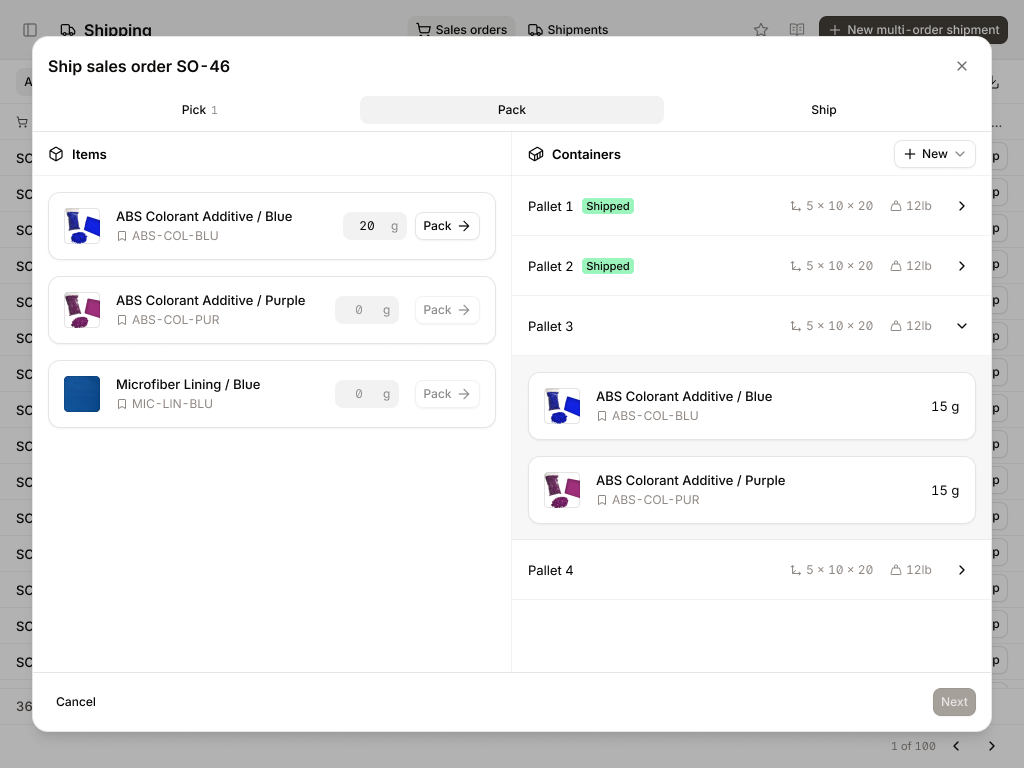
Connected sales and shipping

Streamline how you sell, pack, and ship with all your orders, documents, and customer information centralized within a cloud-based warehouse inventory management software. 

Including:
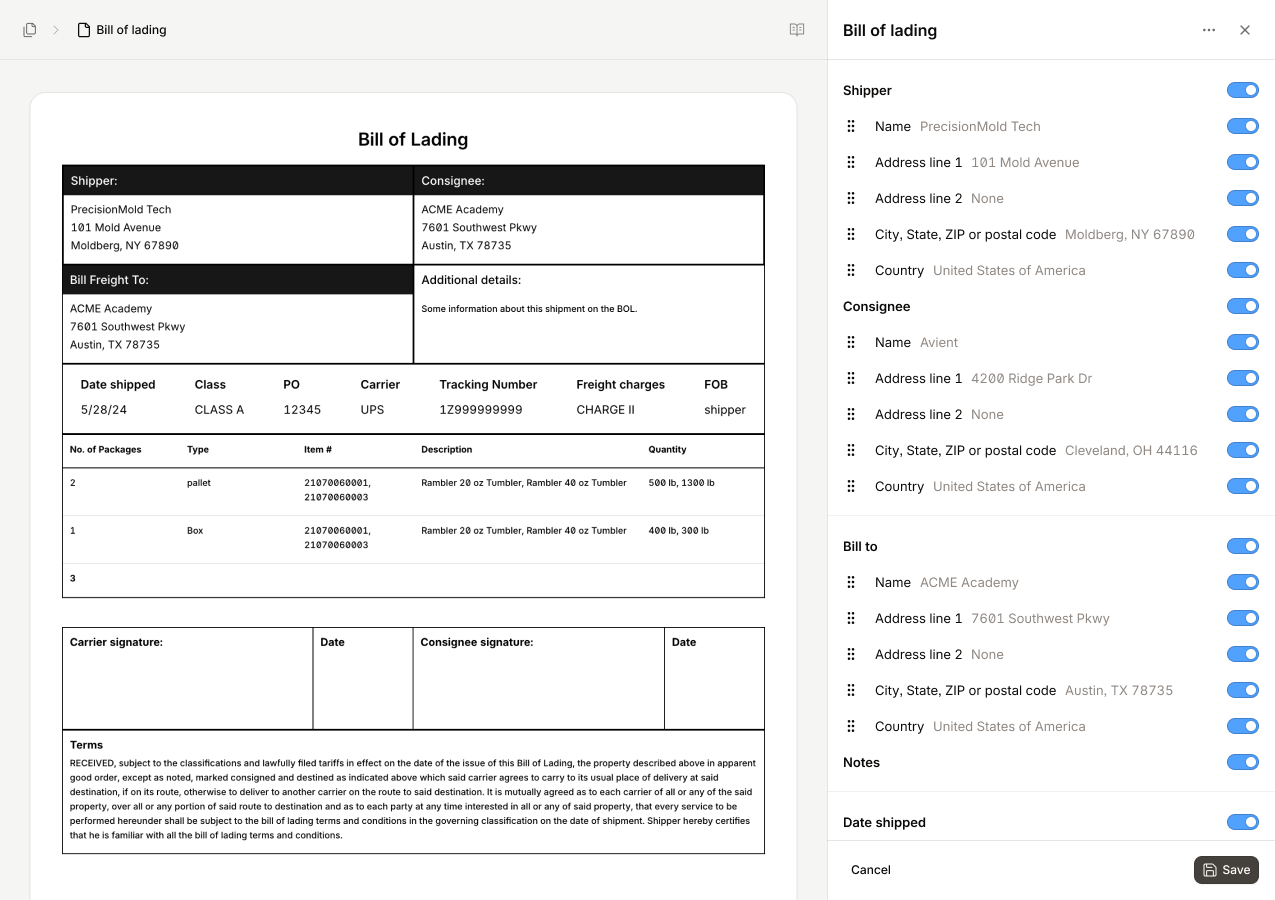
  • Generate packing slips, bills of lading, and master bills automatically 
  • Give customers access to a live B2B portal to track their orders 
  • Convert and manage units of measure across items and shipments 
  • Filter and find items or orders for faster fulfillment in Digit

Multi-location inventory visibility

Track and manage stock across every location and storage bin in place. Get a view of your entire inventory network so every item, transfer, and container stays visible and up to date.

Including:

  • Create and manage multiple warehouses, sub-locations, and bin-level storage
  • Real-time synchronization of inventory data across all locations
  • Barcode and nested inventory tracking for pallets, containers, and mixed loads
  • Transfer items between sites with automatic updates and full traceability

Accurate demand forecasting

Stay ahead of demand with all the data you need to forecast what items you'll need and when you'll need them to keep inventory levels balanced and operations on schedule. 


Including:
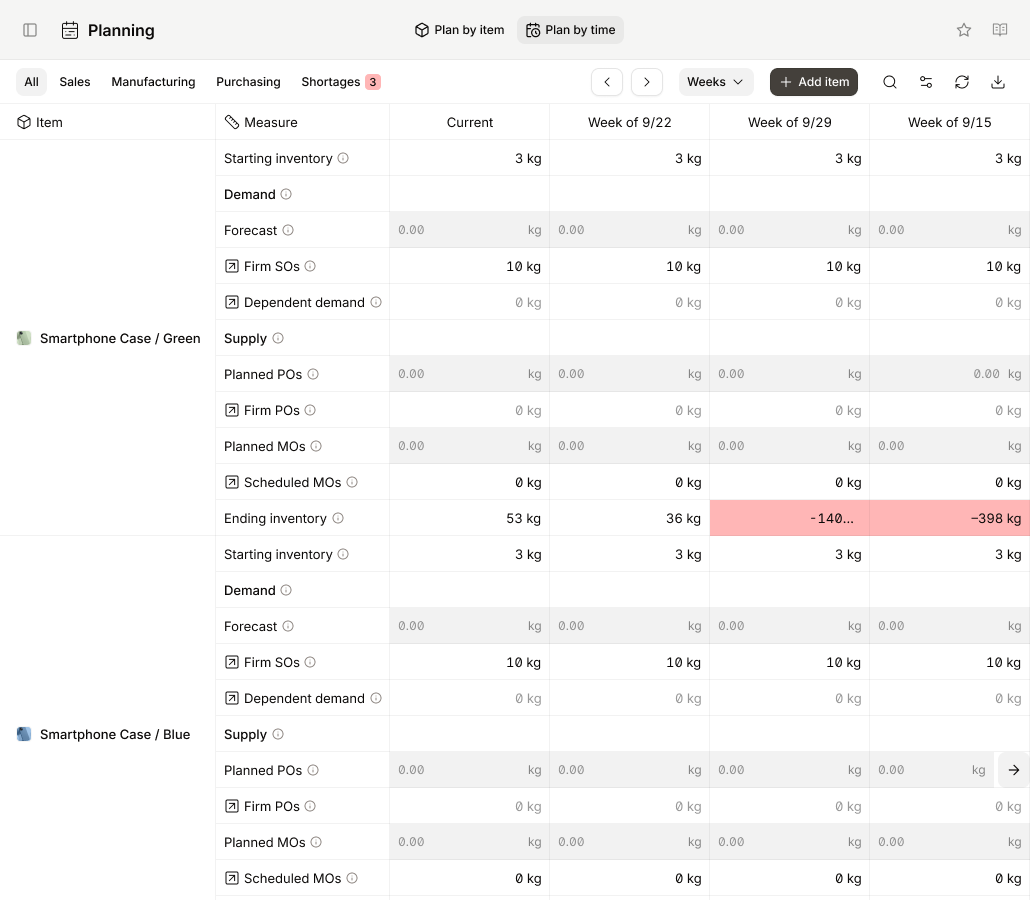
  • Real-time forecasting based on sales and trends 
  • Insight into low stock by setting reorder points 
  • Integrated planning for purchasing and production schedules 
  • Unified visibility across SKUs, warehouses, and demand sources

Integration

A single source of truth for your business

Bring every sales channel and accounting tool together in one system with seamless syncing and flexible API access.

Real people. Real products. Real results.

Chevron right iconChevron right icon
frequently asked questions
We built Digit to make complex operations simple—and that includes our answers. Here’s everything you should know before getting started.
How does a warehouse management system work?
Chevron down icon

Quite simply, a warehouse management system helps you manage your entire warehouse, from tracking where items are moving to and from, acting as a central hub for monitoring all item movements. 

A warehouse management system uses barcode scanners to update stock levels as workers move products through different steps. When new inventory arrives, it’s checked against purchase orders, recorded, and stored. The system also helps manage daily tasks by making picking lists, showing staff where to go, and checking shipments before they leave. This saves time and helps prevent mistakes.

Besides tracking stock, managers can see data around lead time, space usage, and stock accuracy to plan better for expected demand. Some tools, like Digit, connects to other systems like account to keep financial, sales, and production data all up to date.

Is cloud-based WMS better than on-premise?
Chevron down icon

We can answer this with a question, you get an order come through, it's a big one and you're not sure if you have the inventory to meet the order. So, you need to check your stock levels, but you're not at the warehouse. Wouldn't it be simpler to have access to this information from anywhere?

Cloud-based warehouse software is easier to set up, more flexible, and costs less to start than systems kept on-site. Because it works online, your team can log in from anywhere, which is helpful for businesses with more than one warehouse or remote workers. The system also updates and saves data automatically, so you always have the newest tools without needing extra IT help.

An on-premise warehouse software is best for those who have strict security rules (not to say that cloud-based solutions aren't secure). However, it takes more time, money, and effort to manage. For growing businesses that want to move faster, stay connected, and keep costs down, cloud-based software is often the smarter choice.

What are the key features of a warehouse management system?
Chevron down icon

The three key features to look out for in warehouse management software are inventory management, order fulfillment tracking, and warehouse operations management. But, for finding the best software, be sure to see if it has all of the following: 

  • Real-time stock tracking: A warehouse management system tracks every item across warehouses, bins, and containers. Stock levels update automatically when products are received, moved, or shipped, keeping counts accurate at all times.
  • Barcode scanning: Workers can use barcode scanners to receive, move, or pick inventory. This speeds up tasks, removes manual entry, and ensures every movement is recorded correctly.
  • Multi-location management: Allows you to manage multiple warehouses and sub-locations from one place. Stock can be tracked across sites, transferred easily, and viewed in one consolidated view.
  • Receiving and storage: Goods can be recorded as they arrive, even in partial shipments. Each item can be assigned SKUs, labeled, and linked to supporting documents or images for quick reference.
  • Nested inventory: A warehouse management system can show everything contained within a pallet, crate, or box by scanning a single parent barcode, helping teams handle bulk or complex shipments efficiently.
  • Batch and lot tracking: Track materials and finished goods by batch or lot, with details like weight, cost, or quantity to maintain full traceability and quality control.
  • Document and image upload: Files, certificates, or product photos can be attached directly to inventory records, keeping essential information organized and accessible.
  • Picking, packing, and shipping: Supports creating and printing packing slips, bills of lading, and master bills of lading. Staff can locate items quickly and confirm shipments before dispatch.
  • Unit of measure conversions: Automatically convert quantities when items are bought, stored, or sold in different units, ensuring consistency across all warehouse operations.
  • Purchase order management: A warehouse management system can generate and manage purchase orders directly. If inventory is received without a PO, the system can create one automatically to match incoming goods.
  • Stock level monitoring: Set minimum stock levels for each item so it’s easy to see when materials are running low and need replenishing before a shortage occurs.
  • Integrated cost tracking: Helps monitor how storage, handling, and movement costs affect overall warehouse and product performance in real time.

Label and document creation: Create, edit, and reprint custom labels for pallets, bins, and individual products to improve identification and reduce errors.

What size business needs a WMS?
Chevron down icon

Any size business can use a warehouse management system. But it becomes necessary when your warehouse gets complex, even for small teams. If you have a lot of orders, many SKUs, or more than about 20,000 square feet of space, manual methods start to fail. 

A WMS system is a smart decision to implement when you need to work faster, reduce spending, and make customers happier. It automates receiving, tracking, picking, packing, and shipping, meaning fewer mistakes and on-time orders. It’s great for small and mid-sized businesses with limited staff, growing companies that must scale without adding headcount, and teams with too many pick or pack errors. It also helps ecommerce and multi-channel sellers by keeping stock synced across all locations. 

You get live views of stock to prevent stockouts and overstocking. You can also organize layouts and tasks better as your space and flow get more complex. These gains cut labor costs, speed up work, and raise accuracy. That leads to happier customers.

What's the difference between WMS and inventory management software?
Chevron down icon

Inventory management software focuses on the what and how much of stock, giving businesses a high-level view of quantities, costs, and reorder points across all locations. It helps track total stock on hand, forecast demand, and avoid overstocking and stockouts. The goal is to keep accurate counts, manage purchasing workflows, and support decision-making at the company level.

Warehouse management software focuses on where items are kept and how they move around inside a warehouse. It helps with receiving, storing, picking, packing, and shipping, so products move smoothly through every step. A warehouse management system shows exactly where each item is located, makes picking lists for workers, and helps reduce mistakes so orders get sent out faster.

Nowadays, some software, like Digit, gives businesses the best of both worlds. They can use it for inventory management and oversee their warehouse. All this means is that businesses can track purchases, stock levels, and orders all together. They can also see how items are stored, moved, and shipped across different locations. With everything connected in one system, it’s easier to keep control from the moment an order is placed until it’s delivered.
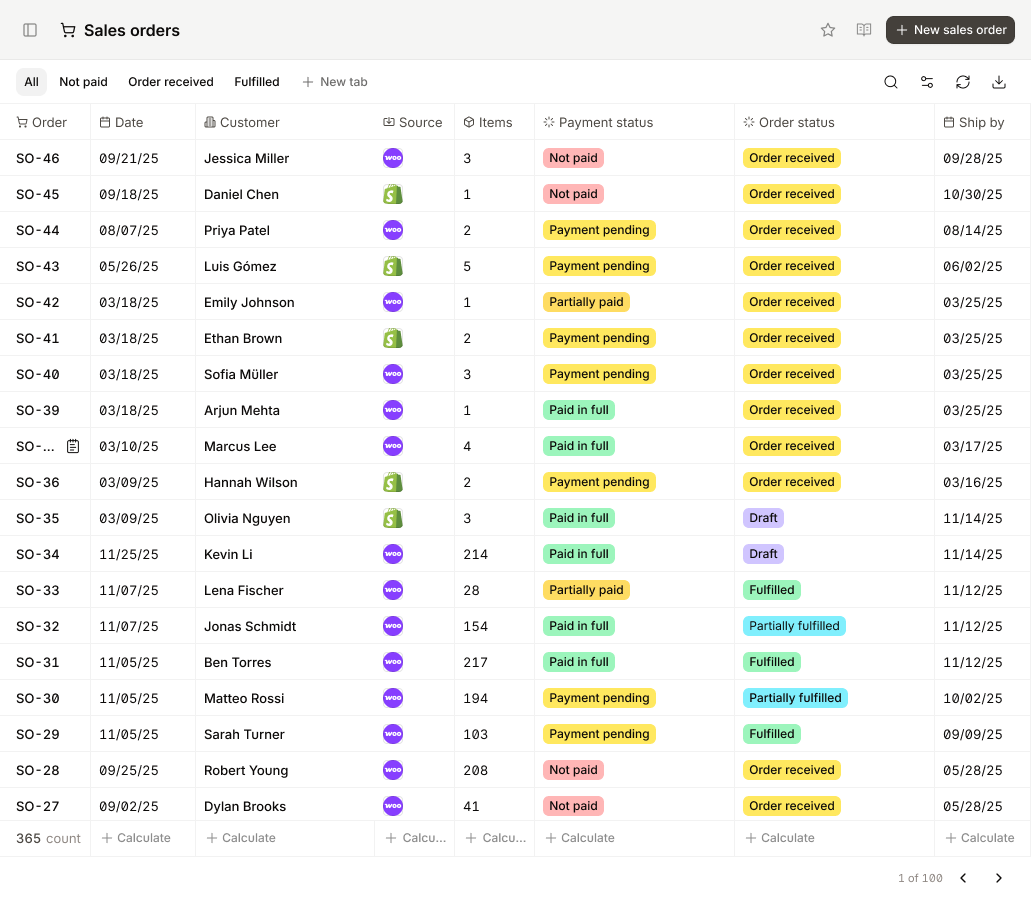
welcome to Digit

Manage your operations beginning to end

Seriously capable, remarkably simple. Digit is the affordable ERP alternative that gets implemented in days.